
Dear Mr. Ignazio Cassis, Minister of Foreign Affairs of the Swiss Confederation,
Dear Mr. Feridun Sinirlioğlu, Secretary General of the OSCE,
Dear participants at the conference “From Geneva to Helsinki: Founding Process and Core Purpose of the OSCE” in Bern,
Dear conference organisers (Dodis Research Centre / Diplomatic Documents of Switzerland),
On the occasion of the conference taking place on 3 and 4 September in Bern on the topic “From Geneva to Helsinki: Founding Process and Core Purpose of the OSCE”, the coordinator of the Helsinki +50 Network, would like to convey this message to you:
1. We are civil society actors, academics, researchers and pacifists from numerous OSCE participating States who travelled to Helsinki in July–August 2025 on the occasion of the 50th anniversary of the signing of the Helsinki Accords, in order to participate in the official commemorative events as well as to hold, on our own initiative and with our own financial resources, several alternative events highlighting the value of the OSCE and its potential role in ending the war in Ukraine. We therefore see ourselves as part of a historical tradition, as some among the many heirs who take this legacy seriously and wish to carry it forward.
2. We welcome your conference as well as the diplomatic efforts of Switzerland concerning a solution to the Ukraine/NATO-Russia conflict. This represents progress compared with the Finnish OSCE Chairpersonship in 2025, which was based on opposition to Russia and thus abandoned the spirit and wording of the Helsinki Accords, the 1990 Paris Charter and the subsequent declarations of OSCE summits, which emphasised the necessity of common and comprehensive security among the participating States. Had these declarations of intent been implemented, there most likely would have been no war in Ukraine, and hundreds of thousands of people, above all young people, might still be alive today.
3. Furthermore, had the Helsinki and subsequent agreements on common and comprehensive security among the participating States not been gradually and deliberately narrowed, apparently under NATO influence, from the three original “baskets” — military-political, economic-environmental and the human dimension of security — first to the ten Helsinki Principles, then to the “Basket Three” principles (the human dimension of security), then to human rights, to human-rights violations in participating States regarded by the West as adversaries (e.g. Russia, Belarus, etc.), and finally reinterpreted into an instrumentalised concept of human rights for the purpose of combating their governments, the OSCE and the Helsinki Process could not have been perverted into a weapon of the West against the “East” — that is, against its own goals. The OSCE would consequently be stronger and more credible today and could play the comprehensive role that was intended for it.
4. If the Western OSCE participating States had not applied double standards when addressing the unequal conflict between the State of Israel and the inhabitants of the multi-generational, concentration-camp-like open air prisons Gaza and Palestine, presumably far fewer people in that part of the world would have lost their lives or their physical integrity.
5. These weak points of Europe/the West, which have manifested themselves in the weakening of the OSCE, were only too visible to attentive observers at last year’s commemorations:
– Finnish President Stubb rhetorically celebrated the opposition to Russia in transatlantic fashion rather than in the Helsinki spirit. Speaking of which: What is left of Mr. Stubb´s high moral standing after the recent signing of a secretive, more than controversial arms contract with Israel?
– The NGOs that were allowed to hold side events were OSCE-affiliated in-house groups.
– The potentially genocidal mass murder in Gaza was thematically marginalised (ultimately unsuccessfully).
6. The solution: Return to the roots of the OSCE/CSCE of 1975–1990; return to the agreements of the later OSCE Summits in their full substantive length and thematic breadth. A closer look is worthwhile — after all, there was a frequently overlooked fourth basket: follow-up meetings. In this spirit, we strongly recommend convening a long-overdue OSCE Summit of Heads of State and Government and beginning the initial preparations for it!
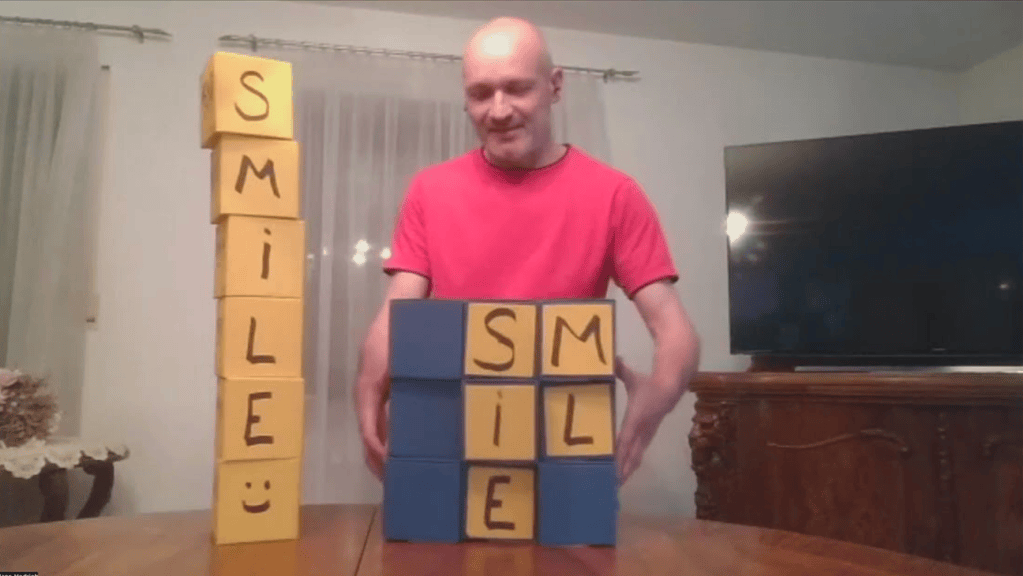
This would be an opportunity to find a way out of the present trap of non-negotiation — after all, the history of Europe also shows that the most durable negotiations and agreements for peace and coexistence (Westphalia 1648, Vienna 1815, Helsinki 1975), which ended major military or ideological conflicts, had the following characteristics: they were successive, multilateral, inclusive, legitimate, and emancipatory (the SMILE criteria).
7. A new OSCE Summit could meet precisely these criteria and therefore have far greater chances of success than previous bilateral or partially exclusive negotiating formats. Europe and the OSCE area need nothing less — but also nothing more — than the common, comprehensive security architecture so often invoked and promised by the OSCE. An OSCE summit can deliver this!
Smile and make peace!
Tord Björk
Coordinator of the Nordic Peace Alliance working group on Helsinki+50
2 September 2026


Leave a Reply